Living on the beach, we’re not close to much native bush and we’ve only seen a few animals in the wild so far. The ones we have seen, though, were pretty outstanding:
Corella, a type of parrot
A huge Lace Monitor, about 2 metres long (6 feet), also called a Goanna.
Bush Turkey
Eastern Water Dragon
Lucky for us, Australia has many reserves and animal parks, big and small. We visited a favorite, Blackbutt Reserve, last week. For those of you who are either snickering or wondering why a park would be called “blackbutt,” sorry to disappoint but it’s not named after a body part. A blackbutt is a kind of tree, the predominant eucalypt in this coastal region. Blackbutts are koala trees (koalas are very picky about what kind of eucalypt they will eat) and a popular hardwood for flooring and furniture. The name comes from the rough, dark bark at the butt (base) of the tree, a sharp contrast to the smooth white bark above it.
Blackbutt Reserve is pretty special. It’s right in the middle of town (the mall is literally 2 kilometres away) but full of unique features, including significant remnant vegetation and a lowland rainforest. The only reason it exists is because the Depression put an end to a proposed housing subdivision and then locals lobbied hard to save the land. Today there are great hiking trails and native animals to enjoy.
Lace Monitor – Here’s what they look like
close up. Those claws are huge and sharp!
Peacock chick – though not native, the chicks
were really cute so I had to take a photo
Glossy Black Ibis
Koalas are actually quite challenging to photograph. They sleep about 22 hours a day and even when they wake for brief moments to reposition themselves, they seldom open their eyes.
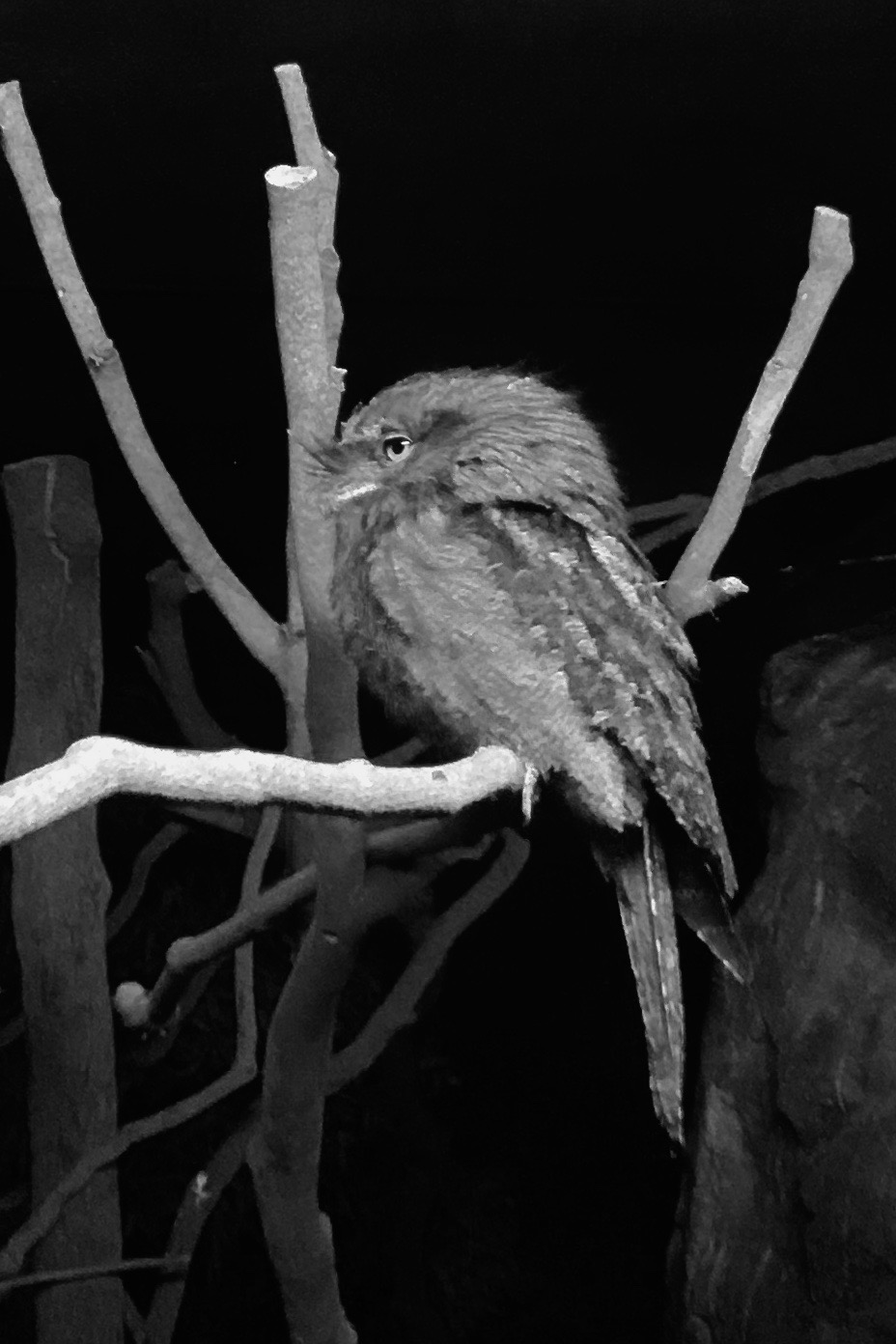
The Tawny Frogmouth is a dull beige and brown and blends in incredibly well in the bush, often looking like the broken stub of a tree branch. This photo is black and white because the birds are nocturnal and their enclosure is very dark.
Gouldian Finches live in far northern tropical Australia
Common Wombat
Kingfisher